Founding Documents
📜 Declaration of Independence
In 1776, the American colonies declared that they were no longer under British rule.
The Declaration of Independence explained why the colonies believed they had the right to form their own government.
See the Original Document
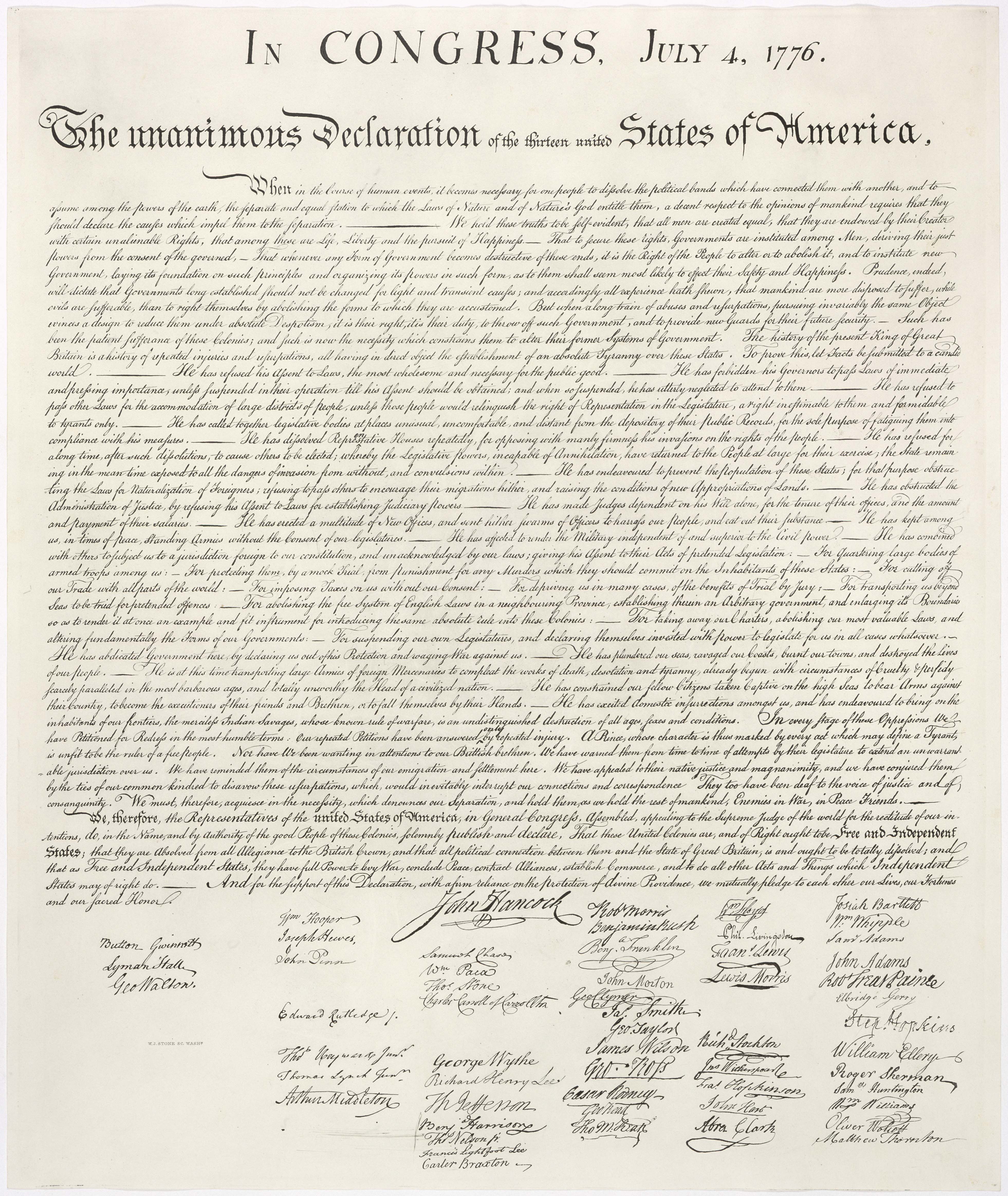
View full-size document (opens in a new tab)
💡 Main Ideas
- People have natural rights.
- Governments get power from the people.
- If a government becomes abusive or unfair, people have the right to change it.
- Laws and leaders should exist to protect rights, not take them away.
📖 How the Declaration Makes Its Case
1. Why explain the separation?
The opening says the colonies owe the world an explanation for breaking their political ties with Britain.
2. Rights and government
It argues that people have rights and governments need the people’s consent. It describes replacing government as a response to sustained abuses, not minor disagreements.
3. Complaints against the King
The colonies list grievances against King George III and describe unsuccessful appeals for change.
Examples: Taxes without consent, interference with representative legislatures, and denial of jury trials.
4. Declaring independence
The closing declares the colonies independent states, able to make peace, form alliances, and conduct trade. The signers pledge their support.
This is a reading guide to the document’s argument. Source: National Archives — Declaration transcript.
🖋️ Famous Lines Explained
“All men are created equal.”
This became one of the most famous ideas in American history, although the reality of equality was very limited in 1776.
“Life, Liberty and the pursuit of Happiness.”
The document argues that governments should protect basic human freedoms.
🔎 Original Words, Plain English
Original idea
“Governments are instituted among Men, deriving their just powers from the consent of the governed.”
Plain English
Governments get their power from the people they govern. Leaders are not supposed to rule just because they want power.
Original idea
“Whenever any Form of Government becomes destructive of these ends...”
Plain English
If a government stops protecting people’s rights, people have the right to change or replace it.
⚠️ Important Historical Context
Although the Declaration spoke about equality and rights, many people in America at the time were excluded from those ideas, including enslaved people, women, and many Native Americans.
Later movements for civil rights and equality often pointed back to the Declaration’s language when arguing for expanded rights.
🏛️ Why It Still Matters
The Declaration of Independence is not a law, but its ideas continue to influence American politics, speeches, court arguments, and debates about rights and freedom.
📚 Sources
- National Archives — Declaration of Independence
- Library of Congress historical materials
- U.S. National Park Service educational resources
🔗 Live Source Links
-
National Archives — Declaration of Independence:
archives.gov/founding-docs/declaration -
Library of Congress:
loc.gov -
National Park Service — Declaration of Independence:
nps.gov