Founding Documents
📜 Constitution
The Constitution is the main rulebook for the United States government.
It creates the three branches of government, explains what powers they have, and sets limits on what the government can do.
See the Original Document
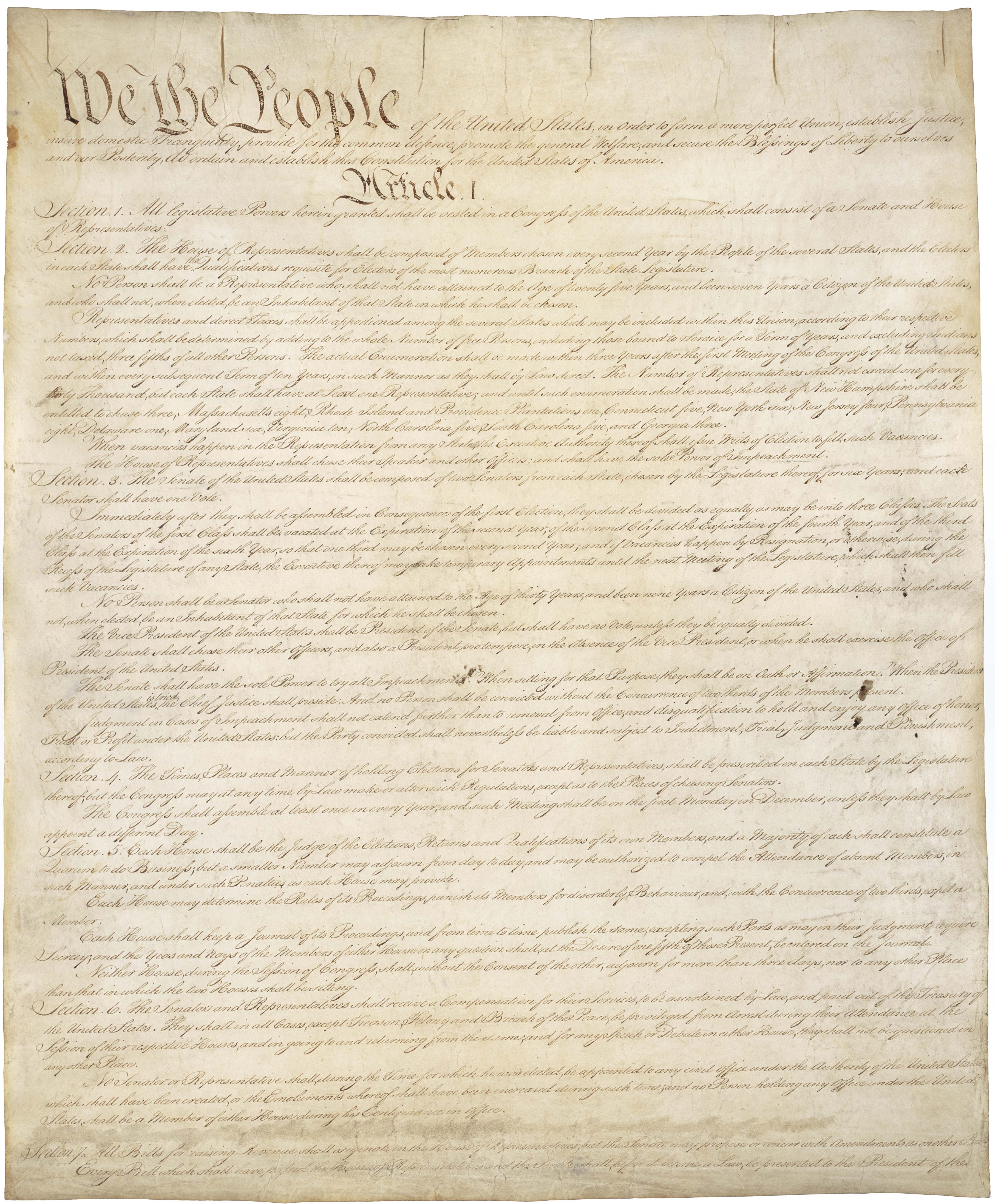
View full-size document (opens in a new tab)
📖 What It Does
- Creates Congress, the President, and the federal courts.
- Divides power between different parts of government.
- Explains how laws are made.
- Gives certain powers to the federal government.
- Limits what government can do.
- Allows changes through amendments.
🏛️ The Big Idea
The Constitution was designed to create a government strong enough to function, but limited enough that no one branch could control everything.
That idea is why the Constitution separates power between the legislative, executive, and judicial branches.
🔎 Original Words, Plain English
Original idea
“We the People of the United States...”
Plain English
The government gets its authority from the people, not from a king or ruler above them.
Original idea
“in Order to form a more perfect Union...”
Plain English
The Constitution was meant to improve the country’s system of government and make the states work better together.
Original idea
“establish Justice...”
Plain English
One goal of the government is to create a fair legal system.
Original idea
“secure the Blessings of Liberty...”
Plain English
The Constitution is supposed to protect freedom for current and future generations.
⚖️ Why Laws Must Follow It
The Constitution is the highest law in the United States. Federal laws, state laws, executive actions, and government decisions are supposed to follow it.
Courts can review laws and government actions. If a court decides that something violates the Constitution, it can block or strike it down.
🧩 Articles and Amendments
The original Constitution has seven articles. The first three establish the branches of government; the others explain how the system fits together and how it can change.
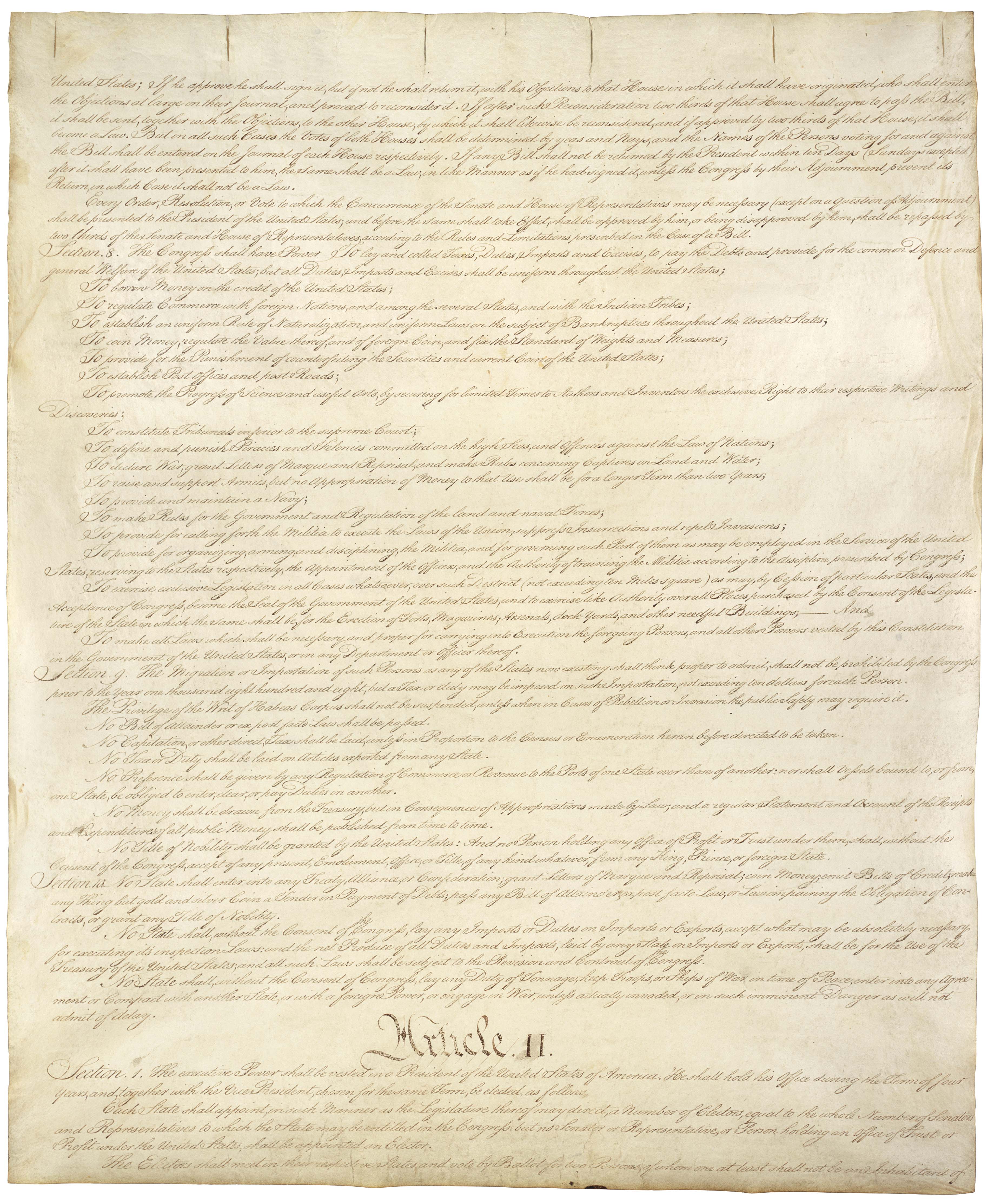
Article I — Congress
Creates the House and Senate. Explains lawmaking, gives Congress powers such as taxing and regulating interstate commerce, and sets limits on federal and state power.
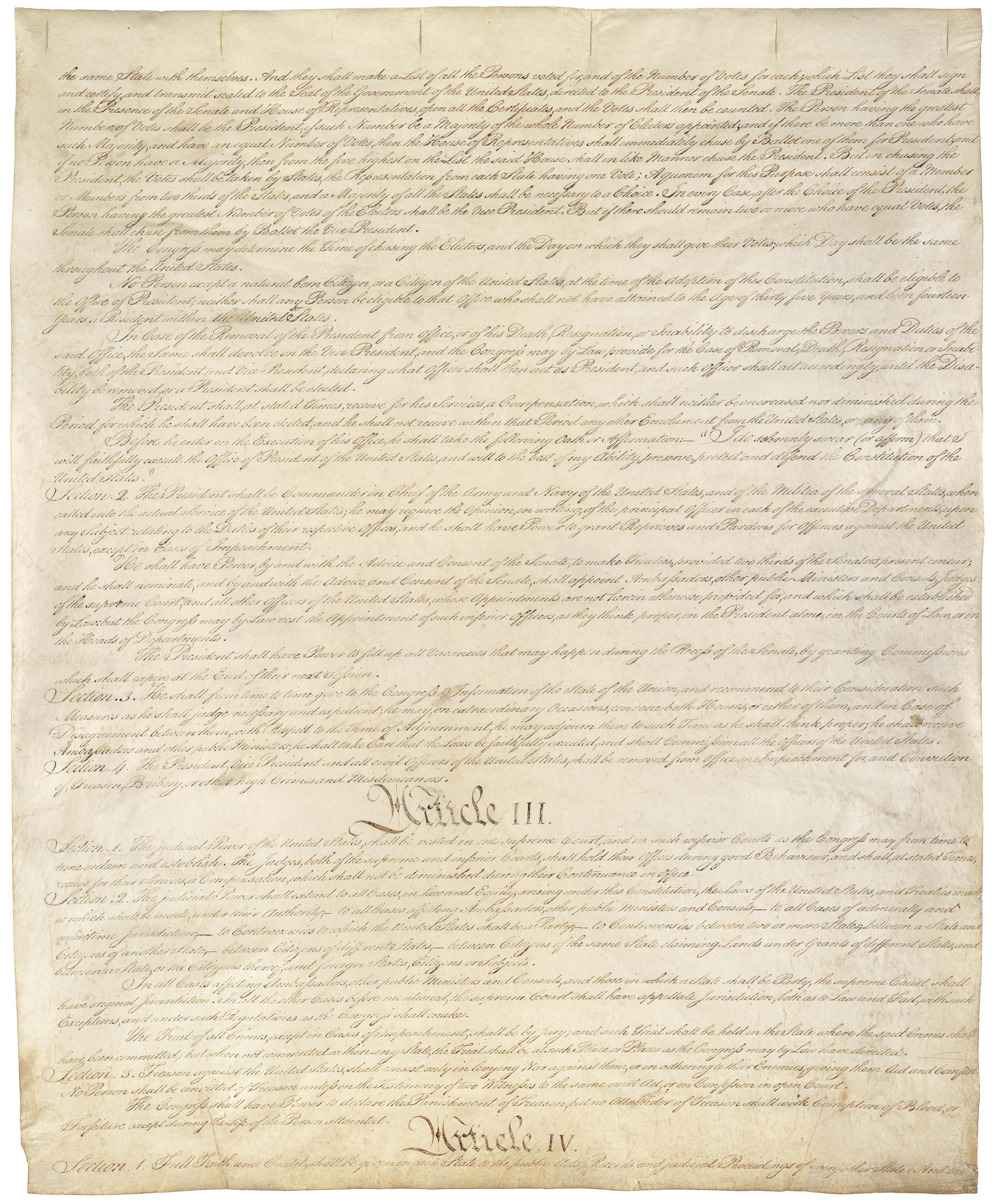
Article II — The President
Establishes the presidency, election rules, and executive duties. The President carries out laws, commands the military, and shares treaty and appointment powers with the Senate.
Article III — Federal Courts
Establishes the Supreme Court and allows Congress to create lower federal courts. Defines the kinds of cases federal courts can hear and addresses treason.
Article IV — The States
Sets rules for relations among states, admitting new states, and governing territories. Guarantees each state a republican form of government.
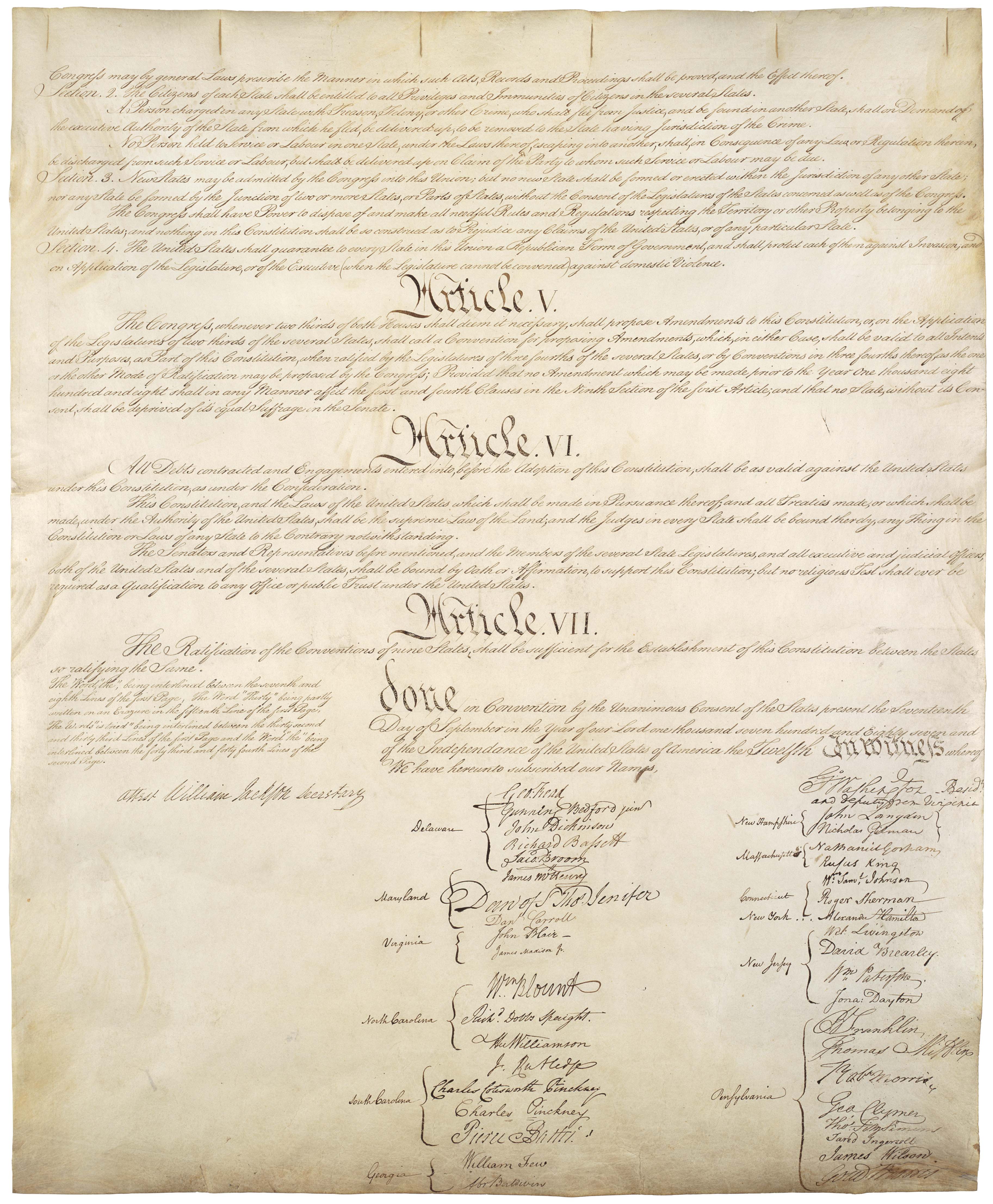
Article V — Changing the Constitution
Explains how amendments are proposed and ratified. Proposals require support from two-thirds of both houses of Congress or a convention called at two-thirds of state legislatures’ request; ratification requires three-fourths of states.
Article VI — The Highest Law
Makes the Constitution, constitutional federal laws, and treaties supreme over conflicting state law. Requires officials to support the Constitution and bans religious tests for federal office.
Article VII — Approval
Required conventions in nine states to ratify the Constitution for it to take effect among the approving states.
Amendments are official changes or additions to the Constitution. The first 10 amendments are called the Bill of Rights.
Later amendments have changed parts of the original rules. Source: National Archives — Constitution transcript.
⚠️ Important Historical Context
The Constitution created a framework for government, but many people were excluded from full political rights when it was written.
Voting rights, citizenship, equal protection, and civil rights expanded over time through amendments, laws, court cases, and social movements.
🏛️ Why It Still Matters
The Constitution still shapes modern debates about free speech, voting, presidential power, courts, privacy, gun rights, federal power, state power, and individual rights.
Many political and legal arguments today are really arguments about how the Constitution should be interpreted.
📄 Full Constitution Pages
The Constitution is written across multiple pages. You can view the original scanned pages below.
Select a page to open its full-size scan in a new tab.
📚 Sources
- National Archives — United States Constitution
- Library of Congress constitutional materials
- U.S. Senate and House educational materials
- U.S. Courts educational resources
🔗 Live Source Links
-
National Archives — Constitution:
archives.gov/founding-docs/constitution -
U.S. Senate — Constitution:
senate.gov -
U.S. Courts — Educational Resources:
uscourts.gov